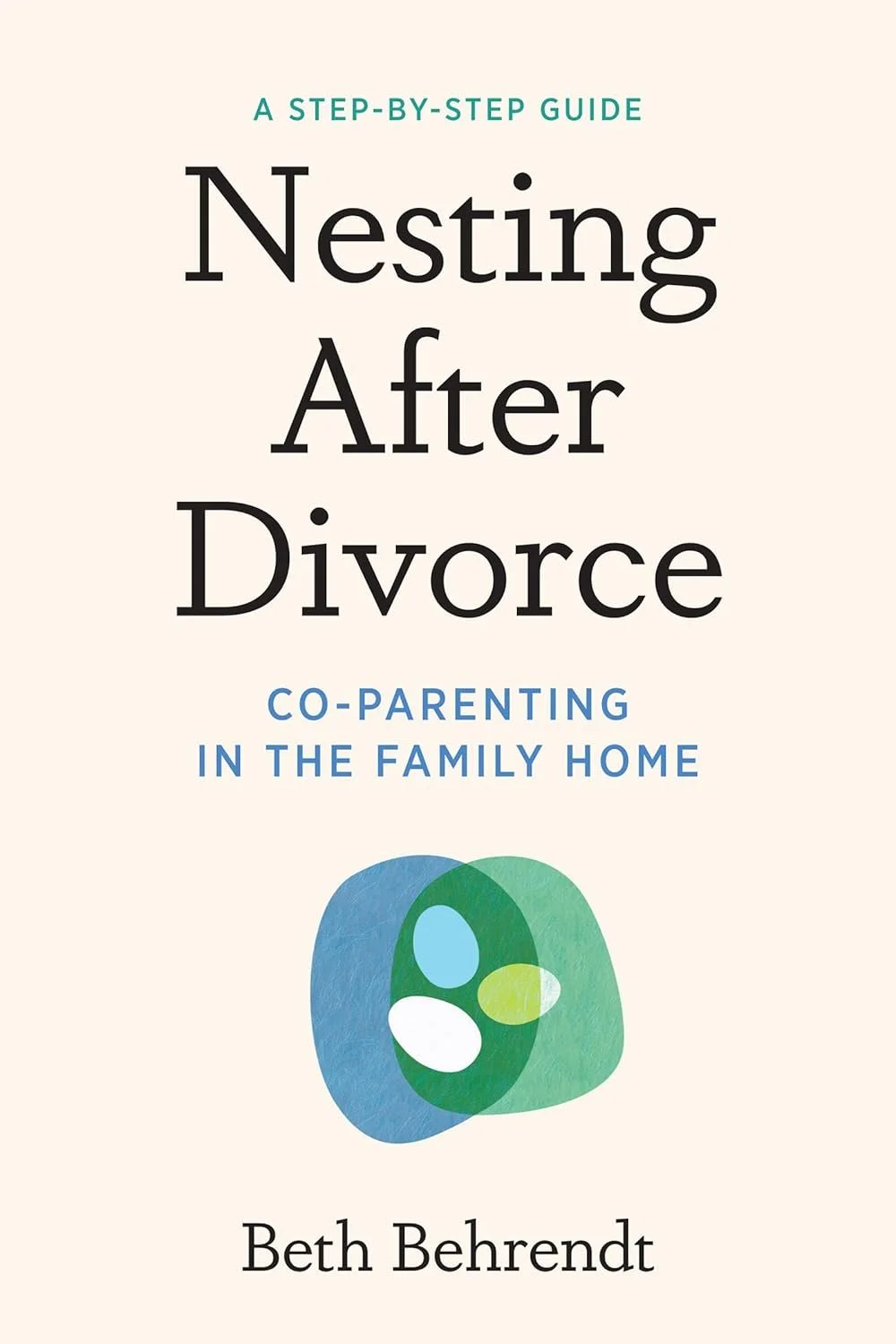
A Book for Families Considering Nesting After Separation: Nesting After Divorce
When couples separate, the question of where the children will live is one of the most significant decisions they will make. Most families default to the traditional two-home model, but there is another arrangement worth knowing about, especially for families who want to minimize disruption for their children during the transition: nesting.
What is a nesting parenting plan?
Nesting is an arrangement in which the children remain in the family home and the parents take turns coming in to care for them, similar to birds returning to a nest. The "off-duty" parent lives elsewhere during their time away, with options ranging from staying with family, renting a small private space, sharing a rental with the other parent, or staying with a new partner. The right arrangement depends on personal preferences and financial circumstances.
Nesting After Divorce provides a detailed personal account of the author's 14 years of experience with nesting, along with practical guidelines to help you decide whether it might be the right fit for your family.
The benefits of nesting
The author sets out several compelling reasons families choose this arrangement. Children remain in the same home, the same bedroom, the same neighbourhood, and the same proximity to school and friends, which provides a level of continuity and stability that a two-home arrangement cannot replicate. They are spared the stress of constantly transitioning between homes and the anxiety of forgetting things along the way. They also maintain a connection to the family history in the home. For parents, nesting provides rotating periods of time and space to themselves. And from a financial standpoint, the family only needs to maintain one home large enough to house the children, which can meaningfully reduce total costs.
What nesting requires
Nesting is not the right choice for every family. For it to work well, both parents need to be able to communicate respectfully and productively, cooperate on financial matters fairly, and maintain clear boundaries around separate time in the home, family time, and shared responsibilities for maintenance, cleaning, and groceries.
Working through the details
The book walks readers through the full arc of a nesting arrangement, from having the initial conversation with your former spouse and talking to your children about the plan, to creating a shared "divorce story" for friends and family, establishing ground rules, assembling a support team, setting up a trial period, reviewing the arrangement periodically, and eventually transitioning out of nesting when the time comes.
Is nesting right for your family?
If you are wondering whether nesting might work for your separation, this book is an excellent starting point. We have helped families create nesting parenting plans and would be happy to work with you to design an arrangement that fits your family's needs. Consider scheduling a Pre-Mediation Initial Consultation to explore your options.
Beth Behrendt is a freelance writer and divorced mother of three who has practiced nesting co-parenting for 14 years. Her articles on nesting have appeared in the New York Times, Psychology Today, and other publications, and she and her former spouse were featured in a Good Morning America segment on marriage and divorce. Visit FamilyNesting.org to learn more.