
Parenting Schedule Options and Considerations for School-Aged Children

For many separating couples with children, deciding on a parenting schedule is one of the most significant and emotionally charged decisions they will make. There is no single right answer, and what works beautifully for one family may not work at all for another. The good news is that you have a great deal of flexibility in designing a schedule that genuinely fits your children and your circumstances.
When determining a parenting schedule in British Columbia, there is no default presumption about what the schedule should be. It will depend entirely on your particular family and what is best for your children. In fact, the only consideration when deciding on a parenting schedule is supposed to be the best interests of the children.
The Best Interests of the Child
According to the Family Law Act of British Columbia, to determine what is in the best interests of a child, all of the child's needs and circumstances must be considered, including the following:
the child's health and emotional well-being;
the child's views, unless it would be inappropriate to consider them;
the nature and strength of the relationships between the child and significant persons in the child's life;
the history of the child's care;
the child's need for stability, given the child's age and stage of development;
the ability of each person who is a guardian or seeks guardianship of the child, or who has or seeks parental responsibilities, parenting time or contact with the child, to exercise the person's responsibilities;
the impact of any family violence on the child's safety, security or well-being, whether the family violence is directed toward the child or another family member;
whether the actions of a person responsible for family violence indicate that the person may be impaired in their ability to care for the child and meet the child's needs;
the appropriateness of an arrangement that would require the child's guardians to cooperate on issues affecting the child, including whether requiring cooperation would increase any risks to the safety, security or well-being of the child or other family members;
any civil or criminal proceeding relevant to the child's safety, security or well-being.
Common Parenting Schedule Types
There are several common schedule structures that separating families use. Each has its own rhythm, and the right one for your family will depend on your children's ages, whether they prefer more frequent or less frequent transitions, your proximity to each other, your work schedules, and your co-parenting relationship. If you work well together, more frequent transitions may work well for you. If there is a higher level of conflict, less contact is generally recommended.
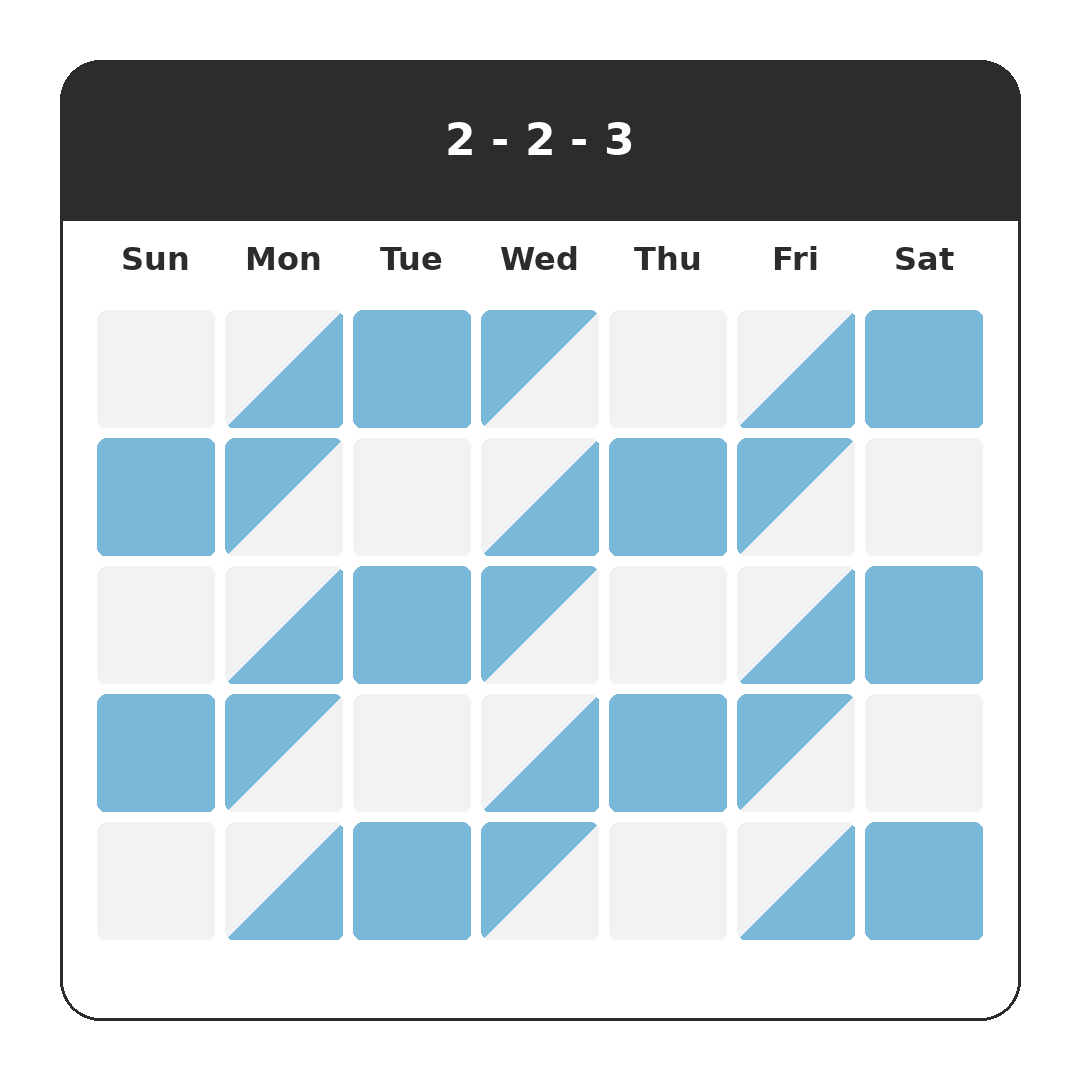
2-2-3 Rotation
Under a 2-2-3 schedule, the children spend two days with one parent, two days with the other, and then three days with the first parent. The following week the pattern reverses. This results in a 50/50 split over two weeks.
Pros: Children see both parents very frequently, with no more than three consecutive days away from either parent. This frequent contact is particularly reassuring for younger children. Each parent also gets alternating weekends.
Cons: The frequent transitions can be logistically demanding, particularly if the parents do not live close to each other. Some children find the constant back-and-forth disorienting, and the schedule can become difficult to manage around extracurricular activities as children get older.
2-2-5-5 Schedule
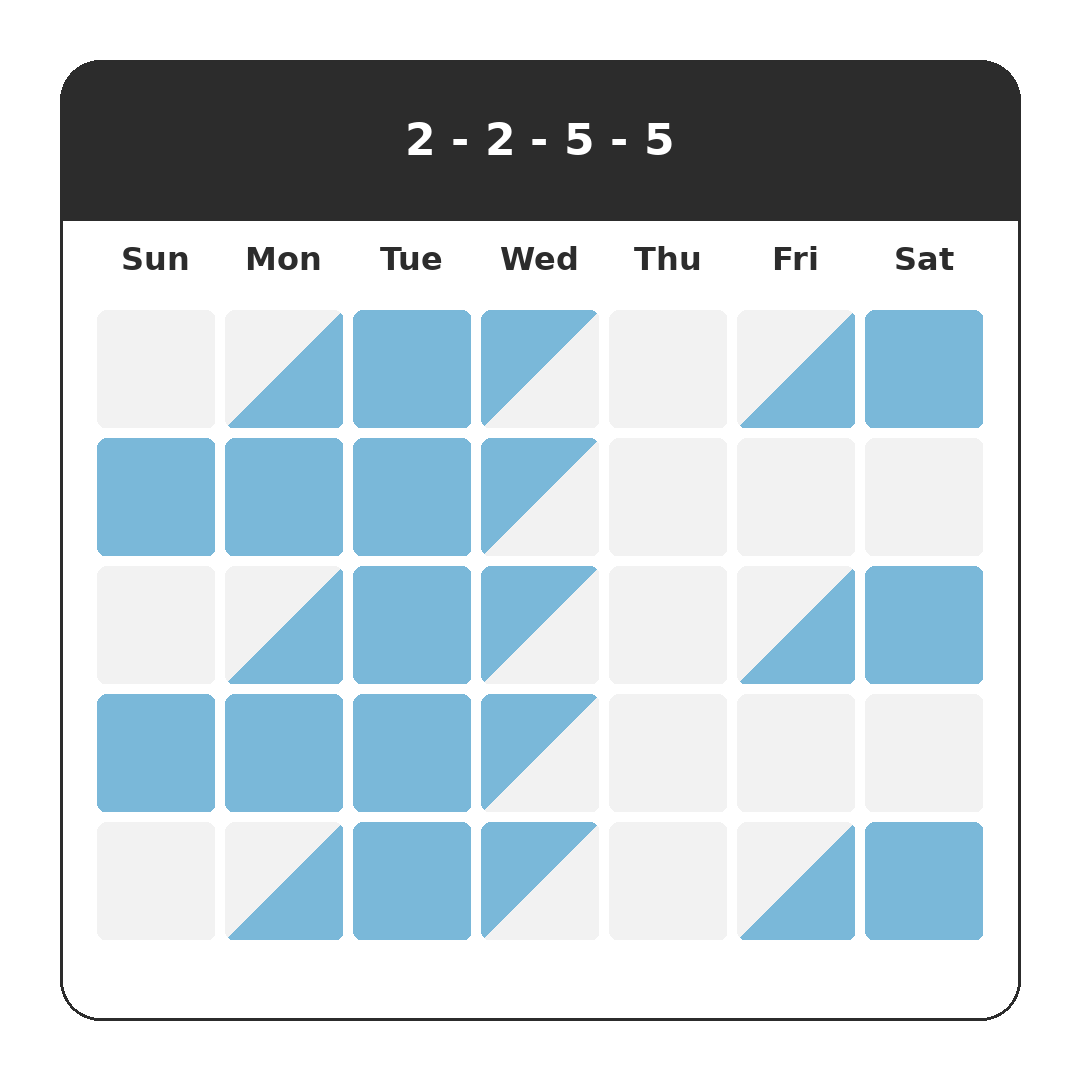
Under a 2-2-5-5 schedule, the children spend two days with one parent, two days with the other, then five days with the first parent, and five days with the second. This also results in a 50/50 split over two weeks, but with longer blocks of time with each parent.
Pros: Each parent has the children on the same two weekdays every week, which creates predictability and makes planning activities easier. The longer five-day blocks provide more continuity than the 2-2-3.
Cons: Children go up to five consecutive days without seeing one parent, which can be hard for younger children. The frequent mid-week exchanges can also be challenging for busy families.
3-4-4-3
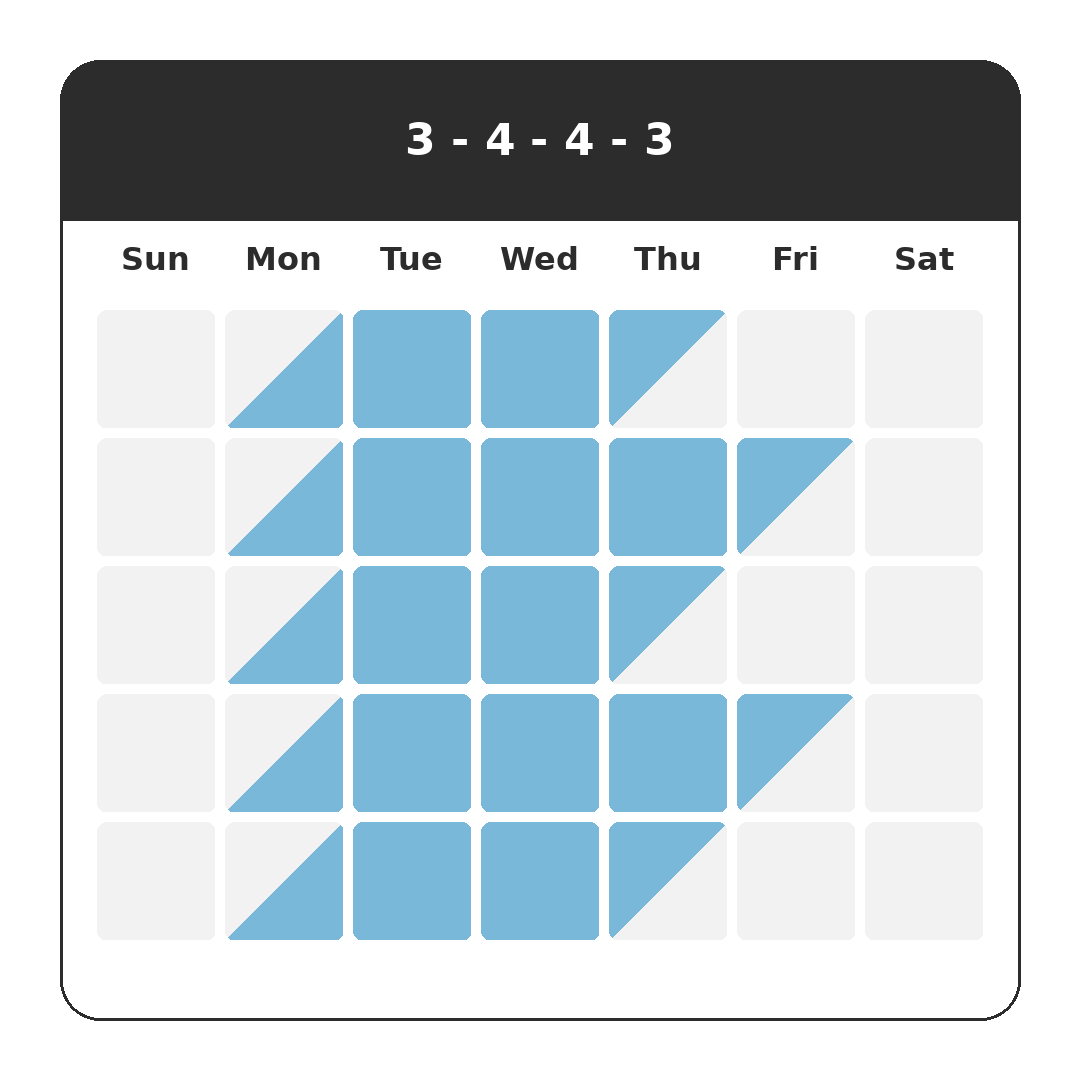
Under a 3-4-4-3 schedule, the children spend three days with one parent, four days with the other, then four days back with the first parent, and three days with the second. This also results in a 50/50 split over two weeks.
Pros: It is less disruptive than more frequent rotation schedules. Each parent has a predictable, consistent block of time, and the longer stretches allow both parents and children to settle into routines.
Cons: The alternating block lengths can be harder to remember than a fixed weekly pattern. Some children find the variation between a three-day and four-day stretch unsettling, particularly younger children. Like the week on/week off schedule, this arrangement works best when parents live close to each other. The most significant concern is that one parent gets parenting time only on weekdays.
Week On / Week Off
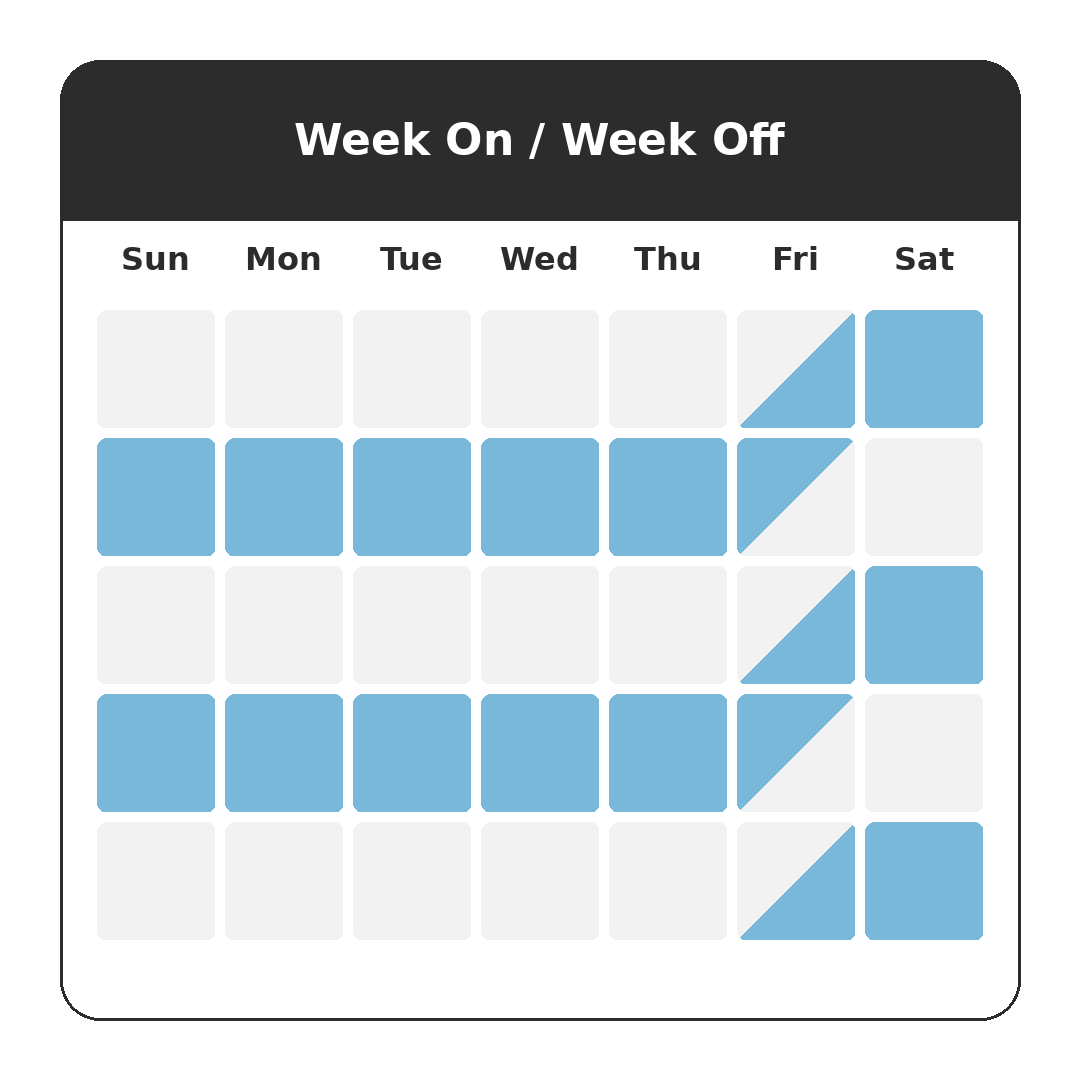
Under a week on/week off schedule, the children spend one full week with one parent and the next full week with the other. Many families add a mid-week dinner or activity to reduce the length of time children go without seeing the other parent.
Pros: The schedule is simple and predictable for everyone. Fewer transitions mean less logistical complexity, and each parent has uninterrupted time to establish routines and rhythms with the children.
Cons: Seven consecutive days without seeing one parent can be difficult, particularly for younger children. This schedule works best for older children and teenagers who can manage longer separations more comfortably.
Every Other Weekend or Every Other Weekend Extended
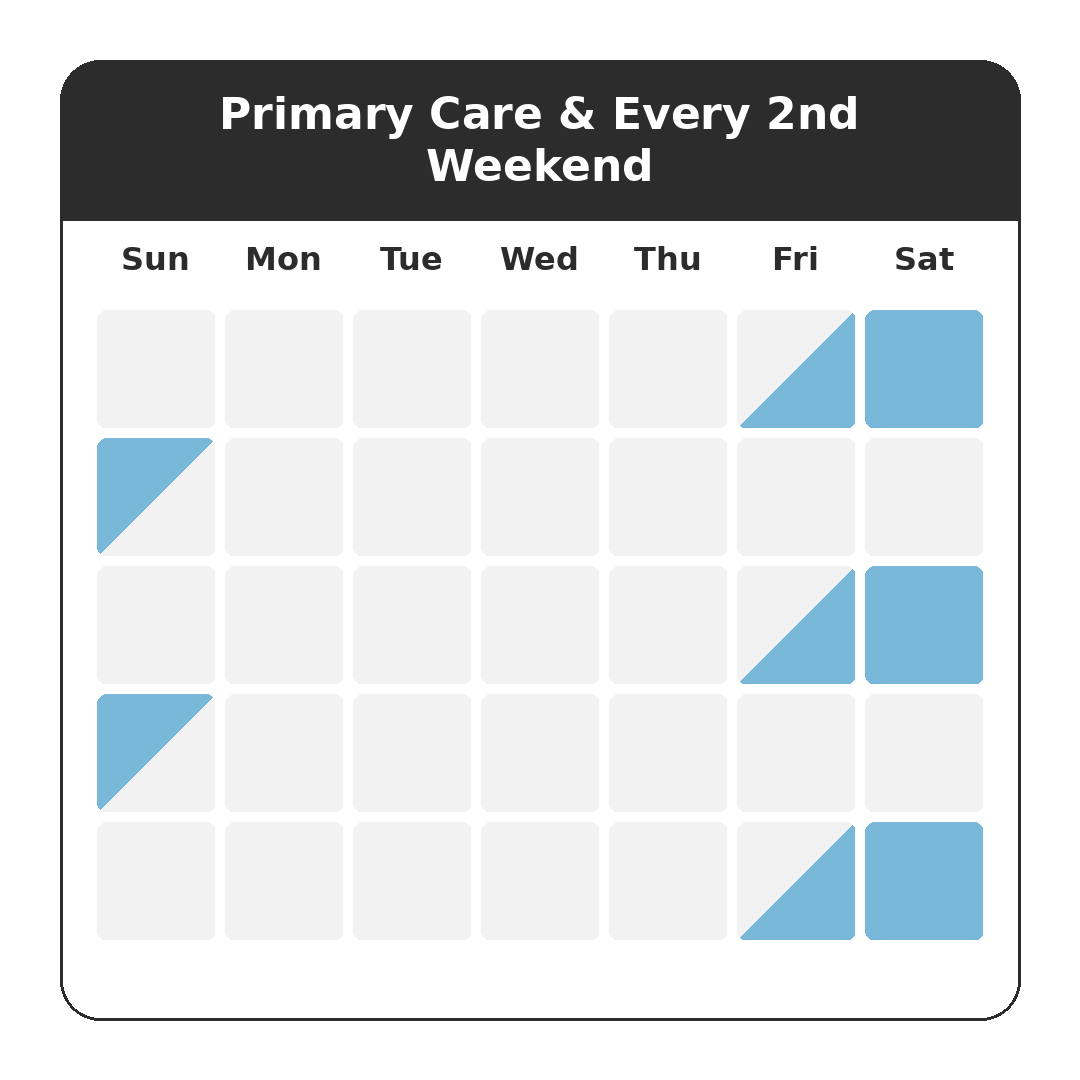
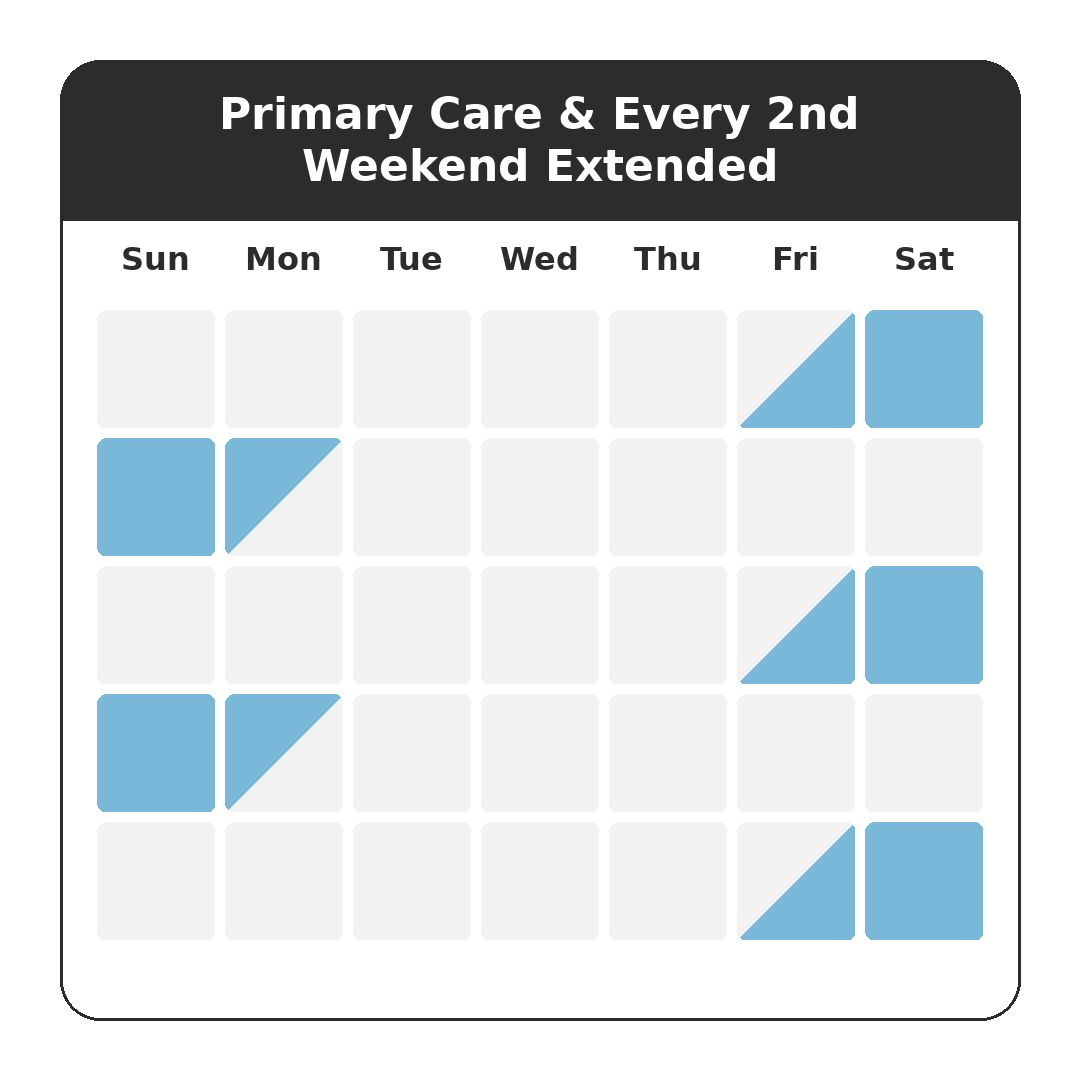
Under an every other weekend schedule, the children live primarily with one parent and spend every other weekend with the other. This results in significantly more time with the primary parent.
With the Extended Schedule, both parents are able to have some involvement with school drop-offs.
Pros: This schedule provides maximum stability and consistency in terms of school, activities, and routines. It can work well when one parent has limited availability due to work schedules or distance.
Cons: The non-primary parent has significantly less time with the children, which can affect the parent-child relationship over time. This schedule is generally considered most appropriate when circumstances make a more equal split impractical.
Considerations by Age
Children's developmental needs change significantly as they grow, and a schedule that works well for a toddler may not work at all for a teenager. Your parenting plan will only address what you agree is appropriate now and it will need to be reviewed as the needs of your children change over time.
Here is a general overview of considerations by stage, keeping in mind that every child is different.
Infants and Toddlers

Very young children have a strong need for consistency, routine, and frequent contact with both parents to form secure attachments. Long separations from either parent can be difficult at this stage. For a breastfeeding infant, you might want to consider that the child will be primarily with the mother and the other parent will have frequent short visits. As the infant grows into toddlerhood, the 2-2-3 schedule is commonly recommended for this age group because it limits the maximum time away from either parent to three days. Overnight visits should be introduced gradually, particularly in the first year of life. As children approach preschool age and their ability to understand time and anticipate transitions develops, schedules can evolve accordingly.
School-Age Children

School-age children can handle longer separations and benefit from schedules that support their academic routines, friendships, and extracurricular activities. The 2-2-5-5 schedule works well for this group because it provides predictability around weekdays while still maintaining regular contact with both parents. The week on/week off schedule with a mid-week visit is also a common and effective choice at this stage. Whatever schedule you choose, consistency and minimizing disruption to school and activities should be priorities.
Teenagers

Teenagers are generally able to manage longer separations and often have strong preferences about their schedule. Their social lives, part-time jobs, and extracurricular commitments are increasingly important to them and should be factored into any arrangement. The week on/week off schedule tends to work well for teenagers because it provides longer, uninterrupted blocks of time with each parent with fewer transitions. It is worth noting that while a teenager's views are an important consideration under the Family Law Act, they are not the only consideration, and the final arrangement should still reflect the best interests of the child overall.
Holidays and Special Occasions
One of the most important things to understand about holiday scheduling is that your holiday schedule takes precedence over your regular parenting schedule. When a holiday falls during the other parent's regular parenting time, the holiday arrangement in your Separation Agreement applies, and the regular schedule resumes once the holiday period ends. Getting this right in your Separation Agreement avoids confusion and conflict down the road.

There are no specific occasions that you have to address but your agreement should address any occasions that are important to you. The calendar will not even distribute holidays between you so you need to put it special provisions for important occasions. Here are some key occasions many families choose to address:
Christmas
Christmas is often the most emotionally significant holiday to plan around. Common approaches include: one parent having Christmas Eve and the other having Christmas Day; splitting the winter school break equally with each parent taking one week; or alternating the entire Christmas period year to year. Some families choose to celebrate Christmas on a different date with one parent, which allows children to experience the full holiday with each household rather than splitting a single day. Many children actually enjoy having two celebrations.
Birthdays
Both parents typically want to be part of their child's birthday and it is usually nice for the child to see each parent on their birthday. Common approaches include: alternating the birthday each year; scheduling a brief visit for the parent who does not have the child that day; or, where the co-parenting relationship allows it, celebrating together. The child's birthday party and the actual birthday do not need to follow the same arrangement.
Summer
Summer break often warrants its own separate schedule, particularly for families using a weekday-focused arrangement during the school year. Many families shift to longer blocks during summer to allow for travel and extended family time, with each parent taking a set number of consecutive weeks, provided that this is age-appropriate.
Other Occasions
Consider including provisions for: Mother's Day and Father's Day (each parent typically has the children on their respective day regardless of the regular schedule); long weekends and statutory holidays; school professional development days; and any other culturally or religiously significant occasions that are important to your family. The more thoroughly you address these occasions in your Separation Agreement, the less room there is for conflict later.
Finding the Right Schedule for Your Family
There is no single parenting schedule that works for every family, and the best arrangements are the ones that are thoughtfully tailored to your children's needs and your particular circumstances. Many families also find that their schedule evolves over time as their children grow and their lives change. Building some flexibility and a review mechanism into your agreement from the beginning is a practical way to accommodate that.
If you are working through a parenting schedule as part of your separation and would like guidance on how to structure an arrangement that genuinely works for your family, we would be glad to help. Consider scheduling a Pre-Mediation Initial Consultation to get started.